
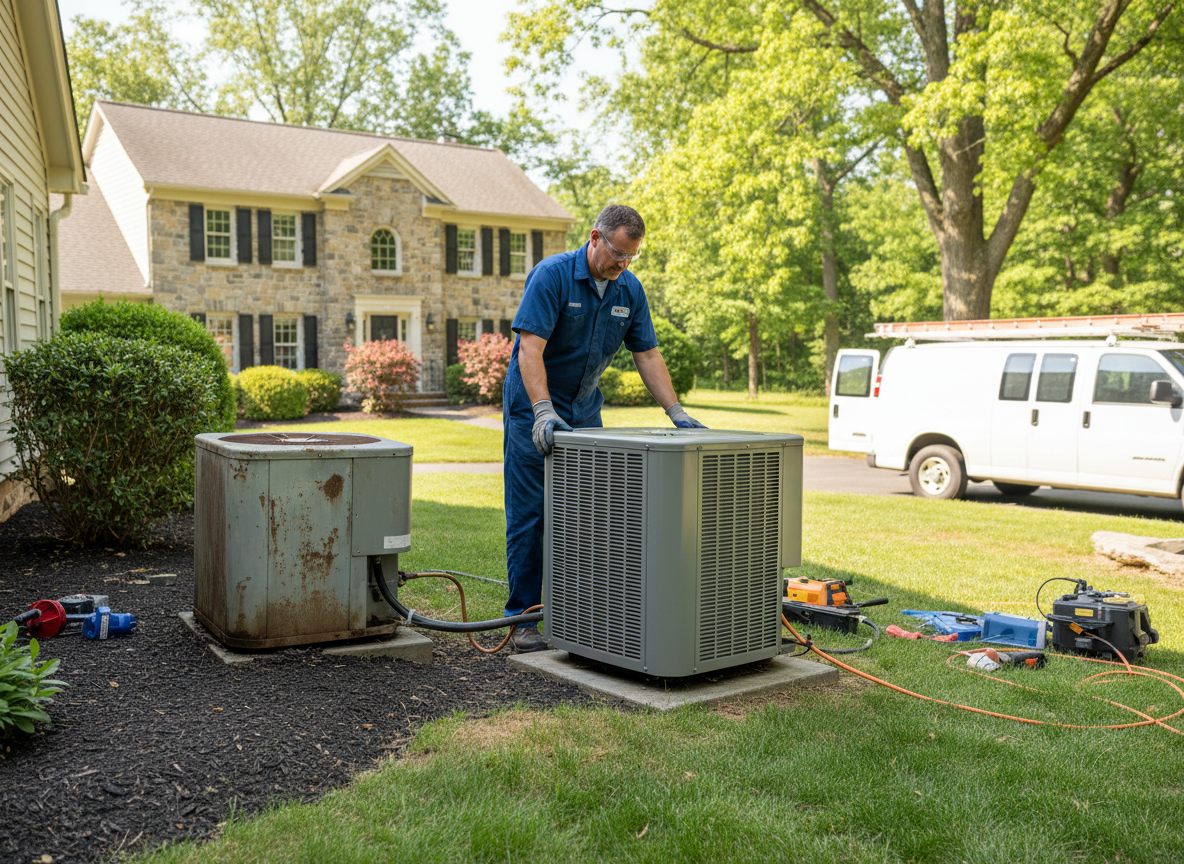
AC replacement becomes the practical choice when an existing system is aging, repeatedly breaking down, or still uses obsolete refrigerant. Many Plumsteadville and Bucks County homes still run equipment from the R-22 era or units that have had multiple major repairs. At that point, continuing to repair often costs more over a few seasons than a properly sized replacement.
A full replacement includes recovery of the old refrigerant, removal of the outdoor condenser and indoor coil or air handler, evaluation of existing ductwork and electrical capacity, and installation of a matched new system. We size equipment with a load calculation rather than simply matching the old tonnage — oversizing is common and leads to short-cycling and poor humidity control in our climate.
Cost to replace an AC system in Pennsylvania typically falls in a broad range depending on size, efficiency, and whether ducts or electrical service need updates. We provide written quotes after an on-site assessment so you can compare the real numbers against continued repair. Brand matters less than correct sizing, quality of installation, and duct performance; we focus on those fundamentals rather than pushing any single label.
Technician insight
In Plumsteadville the factor that most often changes a replacement quote is the condition of the original ductwork and electrical service. Homes from the 1970s–1990s frequently have undersized returns or 100-amp panels. Addressing those issues at replacement time is what allows the new system to actually deliver its rated performance.
Aging R-22 System on a Local Colonial
The existing unit had repeated refrigerant leaks and weak second-floor cooling. After assessing age, repair history, and duct condition, replacement was the clearer path. We installed a properly sized higher-efficiency system, corrected restricted returns, and verified even temperatures throughout the house.
AC Replacement Services We Offer
✓Central Air System Replacement
Full removal of the existing condenser and coil, installation of a matched high-efficiency system, and integration with current ductwork after checking for sizing or leakage issues.
✓High-Efficiency System Upgrade
Replacement of older low-SEER equipment with modern higher-efficiency units that better handle Bucks County summer humidity and reduce operating cost.
✓Attic Air Handler Replacement
Change-out of aging air handlers in tight attic spaces common to local homes, including proper drain pan and safety switch setup.
✓Ductless Replacement Options
Replacement of failing window units or addition of zone cooling where ducted replacement is impractical.
✓Line Set & Electrical Updates
Replacement of corroded line sets and upgrades to disconnects or circuits when the existing infrastructure cannot safely support new equipment.
AC Replacement Cost in Plumsteadville, PA
| Service | Typical Range | What Affects It |
|---|---|---|
| Standard Central AC Replacement | $4,200–$7,800 | Varies by tonnage, efficiency, and whether line sets or electrical updates are needed |
| High-Efficiency Upgrade | $5,500–$9,200 | Higher-SEER or variable-speed equipment plus any duct improvements |
| Ductless / Zone Replacement | $3,100–$6,400 | Depends on number of indoor units and outdoor capacity |
| Attic Air Handler Replacement | $2,800–$4,900 | May include new drain pan and safety switch |
Ranges are typical for Plumsteadville, PA and confirmed with an exact written quote before any work starts.
How it works
- 1
On-Site Assessment
We evaluate the existing system’s age, repair history, refrigerant type, duct condition, and electrical capacity, then perform a load calculation for correct new sizing.
- 2
Clear Quote & Decision Support
You receive a written quote for replacement. We also discuss whether continued repair still makes sense so the decision is based on numbers, not pressure.
- 3
Removal & New Installation
Old equipment is recovered and removed. The new system is installed, line sets and drainage are addressed, and connections are made to existing or updated infrastructure.
- 4
Commissioning & Handover
The system is charged, airflow and performance are verified, and you are shown thermostat operation and basic maintenance points.
Pricing
Most full central AC replacements in the Plumsteadville area fall in the mid-to-upper four-figure range. Final cost depends on system size, efficiency level, and any required duct or electrical work. Quotes are provided after assessment.